Types of Earring Backs, and How to Take Out the Tricky Ones
Push, screw, flat, lever, latch and hinged backs compared for security and comfort, plus how to take out a flat back or a stuck butterfly back.
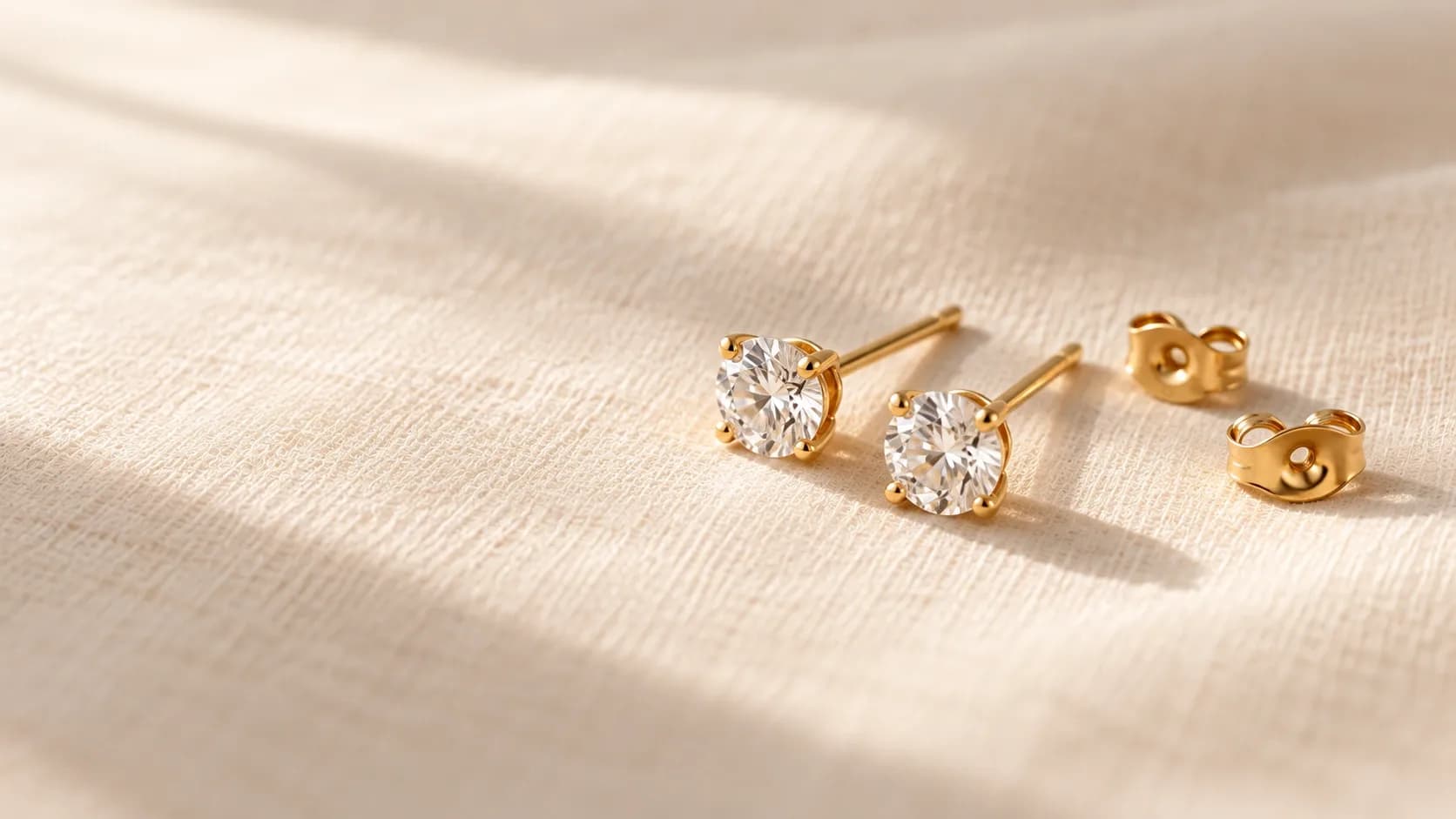
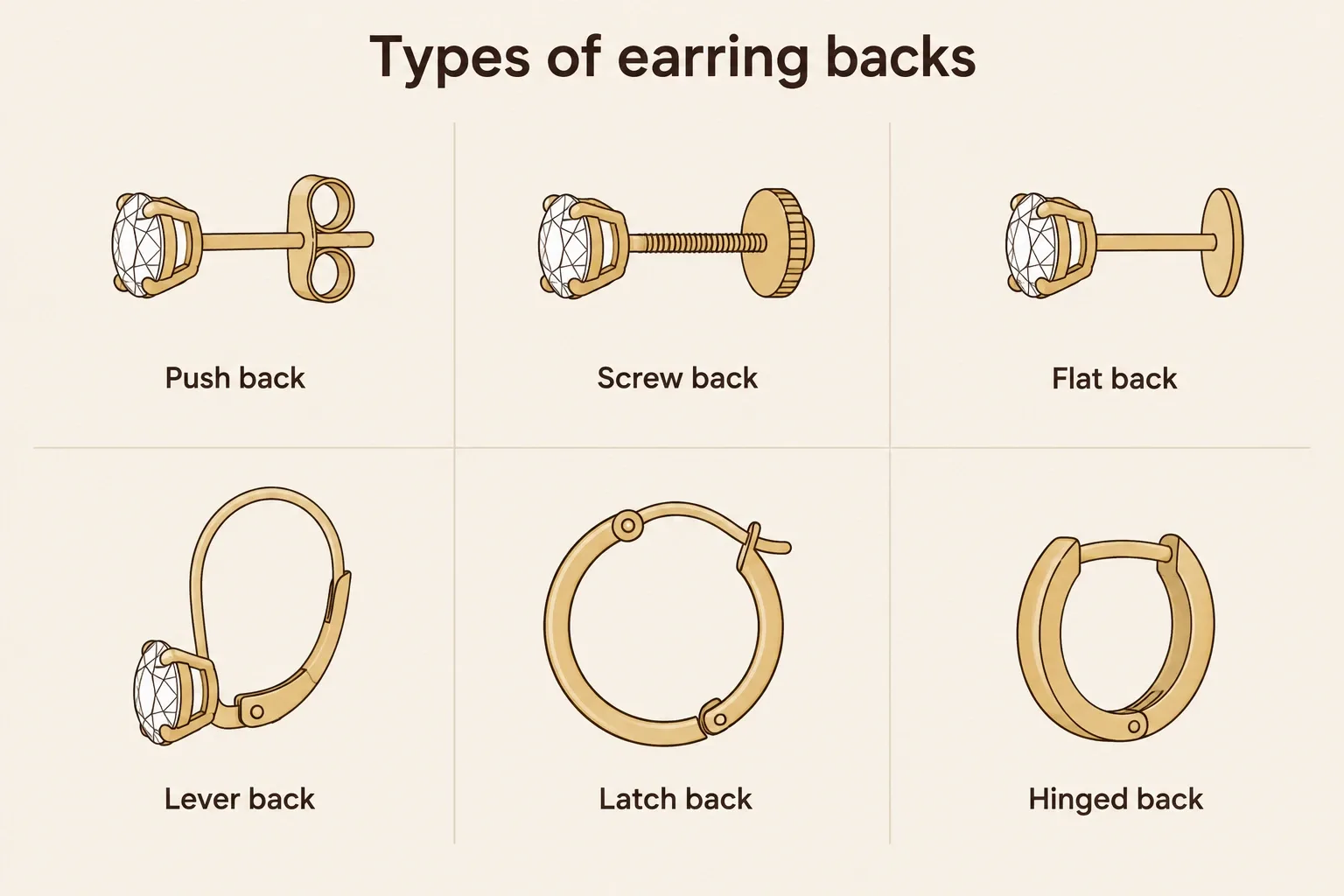
The main types of earring backs are push backs, screw backs, flat backs, lever backs, latch backs and hinged backs, with French wires and threaders for earrings that hang. Each one trades a little security against a little comfort or convenience, and the back that suits you depends on the earring and how you wear it.
Earring backs are also called backings. The most common kind, the one that slides onto a stud's post, goes by three names: a push back, a butterfly back or a friction back.
The main types at a glance
| Back | How it closes | Security | Usually on |
|---|---|---|---|
| Push back (butterfly, friction) | Slides onto the post and grips it | Good | Studs |
| Screw back | Screws onto a threaded post | Very good | Diamond studs and other fine jewelry |
| Flat back | A flat disc sits behind the ear; the front pushes or screws into it | Very good | Piercing studs, cartilage piercings |
| Lever back | A hinged loop closes against the ear wire | Very good | Drop earrings |
| Latch back | The wire clicks into a catch, like a gate | Very good | Hoops and drops |
| Hinged back | A bar swings shut and clicks into a groove | Very good | Huggies and hoops |
| French wire | A curved hook that simply hangs through the ear | Low | Light drop earrings |
| Threader | A fine chain or wire pulled through the ear | Low to good | Threader earrings |
Push backs, screw backs and which is more secure
A push back slides onto the post and holds by friction. It's quick to put on and take off, which is why it's the most common back of all. The catch is that friction can ease over time, so an older push back may start to slip.
A screw back turns onto a threaded post, so it can't slide off. It's more secure than a push back and a common choice for diamond studs, at the cost of a few extra seconds each time. To put one on, hold the front of the earring and turn the back clockwise until it's snug; to take it off, turn it the other way. Only use a screw back on a threaded post. Browse our diamond stud earrings.
Backs for hoops, huggies and drops
Earrings that hang or wrap around the ear don't use a separate back. Huggies and many hoops have a hinged back: a short bar that swings shut and clicks into a groove. Other hoops close with a latch, where the wire clicks into a catch. Drop earrings often use a lever back, a hinged loop that closes against the wire so the earring can't slip out, or a French wire, an open hook held in place only by the earring's weight. See our huggie earrings, diamond hoops and drop earrings.
How to take out a flat back earring
A flat back is two pieces: a post with a flat disc at the back, and a decorative top at the front. There are two kinds, and they come apart differently, so first check which you have.
- Threadless (push-pin): hold the flat disc behind your ear with one hand. With the other, grip the front and pull it gently straight out, away from your ear. They can let go suddenly, so start gently and increase the pressure slowly. A slight rocking motion helps.
- Threaded: hold the disc still behind your ear, then turn the front counter-clockwise, as you'd unscrew a bottle cap, until it comes free.
Once the front is off, slide the post out from the back. Wash your hands first, and dry them, so you can grip the small parts. Warm water from a shower can make things easier to move. If the jewelry won't come apart, or the piercing is sore or swollen, stop and see a professional piercer rather than forcing it.
Butterfly backs and stuck backs
To take off a butterfly (push) back, hold the front of the earring steady with one hand so the post doesn't push through your ear. With the other, grip the back with your thumb and finger and pull it straight back along the post, wiggling gently if it's tight.
If a back is stuck, don't pull the whole earring through. Wash the area with warm water and a little soap, which can loosen buildup on the post, then try again with the front held firmly. If it still won't move, a jeweler or a professional piercer can take it off.
Which back to choose
- For diamond studs you'd hate to lose: a screw back.
- For everyday studs you take off often: a push back.
- For sleeping in, or new and cartilage piercings: a flat back, which sits flat behind the ear and doesn't poke.
- For drops: a lever back if the earring is heavy or valuable; a French wire only for light earrings.
- For hoops and huggies: the hinged or latch back they're made with.
Not sure which back a pair of our lab grown diamond earrings uses? Ask us before you order.