1.5 Carat vs 2 Carat: How Much Bigger, and How Much More?
We measured 1.5 and 2 carat lab grown diamonds and compared their prices. The 2 carat is about 10% wider and 21% bigger face up, for about 1.5 times the price.

Put a 1.5 carat vs 2 carat diamond side by side, and the bigger one is only about 10% wider, even though it weighs a third more. Seen from above, it shows about 21% more surface. Among lab grown diamonds listed for sale online in the US, it also cost about 1.5 times as much at the same grade.
So the extra half carat buys less size than its weight suggests, and it costs more than its weight suggests. We measured both sizes, worked through a 1.5 vs 2 carat oval in millimeters, and checked whether a 1.9 carat is a smart middle ground. A table at the end turns the numbers into a choice.
A 1.5 vs 2 carat oval, measured
The oval is the shape people compare most at these two sizes, so it's our worked example. Each figure is the median: the middle stone when all of them are lined up from smallest to largest.
| 1.5 carat oval | 2 carat oval | Difference | |
|---|---|---|---|
| Length | 9.29 mm | 10.25 mm | 0.96 mm longer (10%) |
| Width | 6.52 mm | 7.15 mm | 0.63 mm wider (10%) |
| Length to width | 1.42 | 1.43 | the same outline |
| Face-up area | 47.5 mm² | 57.5 mm² | 21% more |
| Share of a US size 6 ring's width | 40% | 43% | 3 points more |
| Price, same grade | 1× | 1.44× | 44% more |
Put simply, the 2 carat oval is about 1 mm longer and just over half a millimeter wider. The outline doesn't change, so the bigger stone is a scaled-up copy of the smaller one, not a longer or slimmer oval.
When an oval is set lengthwise along the finger, its width is what sits across it. A US size 6 ring measures 16.5 mm across inside. A 1.5 carat oval covers about 40% of that width, and a 2 carat about 43%.
Cut moves these numbers a little, but not enough to close the gap. The middle half of 1.5 carat ovals ran from 9.14 to 9.44 mm long, and the middle half of 2 carat ovals from 10.11 to 10.41 mm. A long 1.5 carat still falls short of a short 2 carat.
You can compare both sizes, with today's prices and each stone's exact measurements, in our 1.5 carat lab grown diamonds and 2 carat lab grown diamonds. To see them in a ring, browse our oval engagement rings.
What we checked
- When: 28 September 2026, one day's listings of lab grown diamonds for sale online in the US
- Sizes: 168,653 round and oval stones, D to H color, VS2 clarity or better, with a GIA or IGI report. Color and clarity don't change size, so we used a wider grade here to measure more stones.
- Prices: 5,661 rounds and 1,173 ovals, all F color, VS1 clarity, with a GIA or IGI report
- Size bands: 1.50–1.59, 1.70–1.79, 1.90–1.99 and 2.00–2.09 carats
- Figures used: the median length, width and asking price in each band. Face-up area is worked out from length and width.
- Limits: asking prices on one day, not what buyers finally paid. We found too few ovals at 1.7 and 1.9 carats to trust their prices, so the in-between price figures use rounds only.

Most of the extra price arrives by 1.7 carats
A common tip is to buy just under a round number, a 1.9 instead of a 2, and keep the savings. For lab grown rounds, there wasn't much to keep. A 1.9 carat was 2% narrower than a 2 carat and cost about 3% less. A 1.7 carat was 5% narrower and cost about 7% less.
The chart shows where the money goes. From 1.5 to 1.7 carats, the price rose 37% while the face-up area grew 8%. From there to 2 carats, price and size crept up together. Per square millimeter of face-up area, the 1.7, 1.9 and 2 carat stones all cost about the same. The 1.5 carat cost about a fifth less.
Ovals follow the same size pattern: 9.68 mm long at 1.7 carats and 10.07 mm at 1.9, against 10.25 mm at 2. We just didn't find enough of them to judge their prices.
Why a third more weight looks only 10% bigger
Think of a sugar cube. Make it 10% longer, 10% wider and 10% taller, and it holds 33% more sugar. A diamond grows the same way. The extra weight of a 2 carat spreads into length, width and depth, so each grows by only about 10%. The face-up area uses two of those, so it grows by about 21%. Our measurements matched both figures almost exactly, for rounds and for ovals.
Price doesn't spread out like that. It follows the weight, then adds a little more for size. A 2 carat has a third more weight than a 1.5, and each of its carats cost about 11% more. Together, those make the 1.48 times we found for rounds.
The step below works the same way. A lab grown 1.5 carat cost about 2 times as much as a 1 carat for 30% more face-up area, and a 2 carat about 3 times as much for 57% more. We compare those steps with mined diamonds in are lab grown diamonds worth it.
Every shape gains about 10%
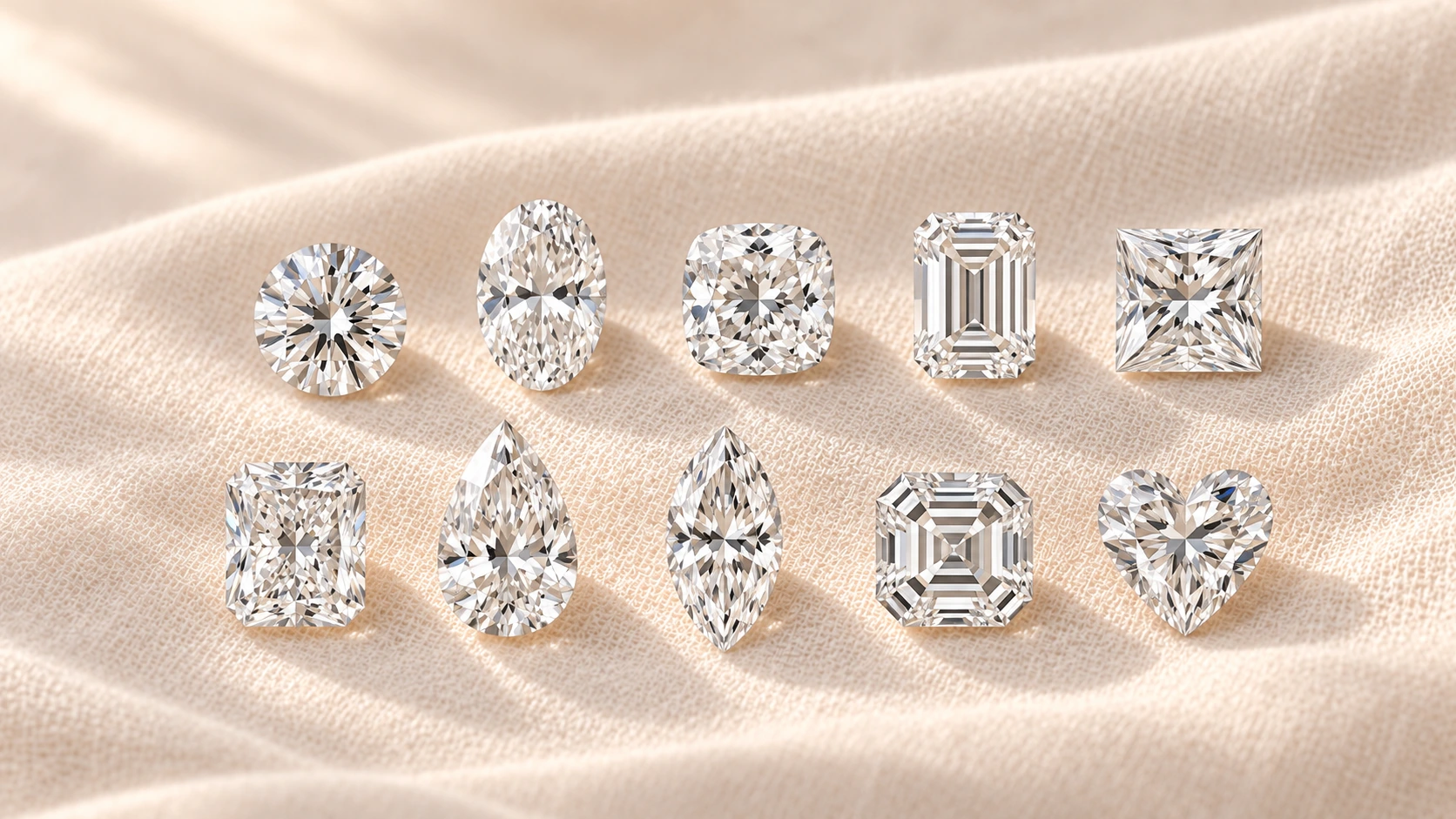
The rule isn't special to ovals and rounds. Across every shape we measured, going from 1.5 to 2 carats added 9 to 11% to the length. Long shapes gain the most millimeters, because 10% of a long stone is more.
| Shape | 1.5 carat (mm) | 2 carat (mm) | Longer by |
|---|---|---|---|
| Round | 7.41 across | 8.15 across | 0.74 mm |
| Oval | 9.29 × 6.52 | 10.25 × 7.15 | 0.96 mm |
| Cushion (square) | 6.74 × 6.61 | 7.40 × 7.26 | 0.66 mm |
| Emerald | 7.85 × 5.44 | 8.57 × 5.99 | 0.72 mm |
| Princess | 6.33 × 6.26 | 6.96 × 6.87 | 0.63 mm |
| Radiant (elongated) | 8.19 × 5.72 | 8.98 × 6.27 | 0.79 mm |
| Pear | 10.20 × 6.45 | 11.25 × 7.09 | 1.05 mm |
| Marquise | 11.84 × 6.02 | 12.96 × 6.62 | 1.12 mm |
We priced only rounds and ovals for this comparison. Fancy shapes tend to cost a little more than rounds at the same grade, as we found in which diamond shape costs the most.
When the half carat is worth paying for
On value, the 1.5 carat wins. On presence, the 2 carat does. Where you land depends on your hand and on what else the money could buy.
| If you… | Lean toward | Because |
|---|---|---|
| want the most size for your money | 1.5 carat | Per square millimeter of face-up area, it cost about a fifth less than a 1.7, 1.9 or 2 carat |
| would rather spend on color, clarity or the setting | 1.5 carat | The 2 carat costs about 1.5 times as much at the same grade |
| wear a US size 4 or 5 | 1.5 carat | A 1.5 carat round already covers about half the width of a size 4 ring. A 2 carat covers 55%. |
| wear a US size 7 or 8 | 2 carat | On a size 8, a 2 carat round covers 45% of the ring's width, the same share a 1.5 carat covers on a size 6 |
| want length on the finger without paying for 2 carats | 1.5 carat oval | At 9.29 mm long, it's longer than a 2 carat round is wide (8.15 mm), and it cost about 23% less than that round at the same grade |
| want "2 carats" on the grading report | 2 carat | A 1.9 carat saves only about 3% |
| found a 1.7 or 1.9 carat you like | compare it with a 2 carat | The size gap is 2 to 5% and the price gap 3 to 7%. For a bigger saving, drop to 1.5. |
We sell both sizes, and the 2 carat is the bigger sale for us. On value, the numbers still point to the 1.5. Neither size is an investment, though. Lab grown prices have fallen fast in recent years, so don't expect either stone to hold its price if you sell it later. Pick the size you'll enjoy wearing.
One more question
For a lab grown engagement ring today, it's about average. In a 2026 survey of more than 10,000 US couples married in 2025, lab grown center stones averaged 2.0 carats and mined ones 1.6 carats. So a 2 carat sits right at the lab grown average, while a 1.5 carat is a little under even the mined one.