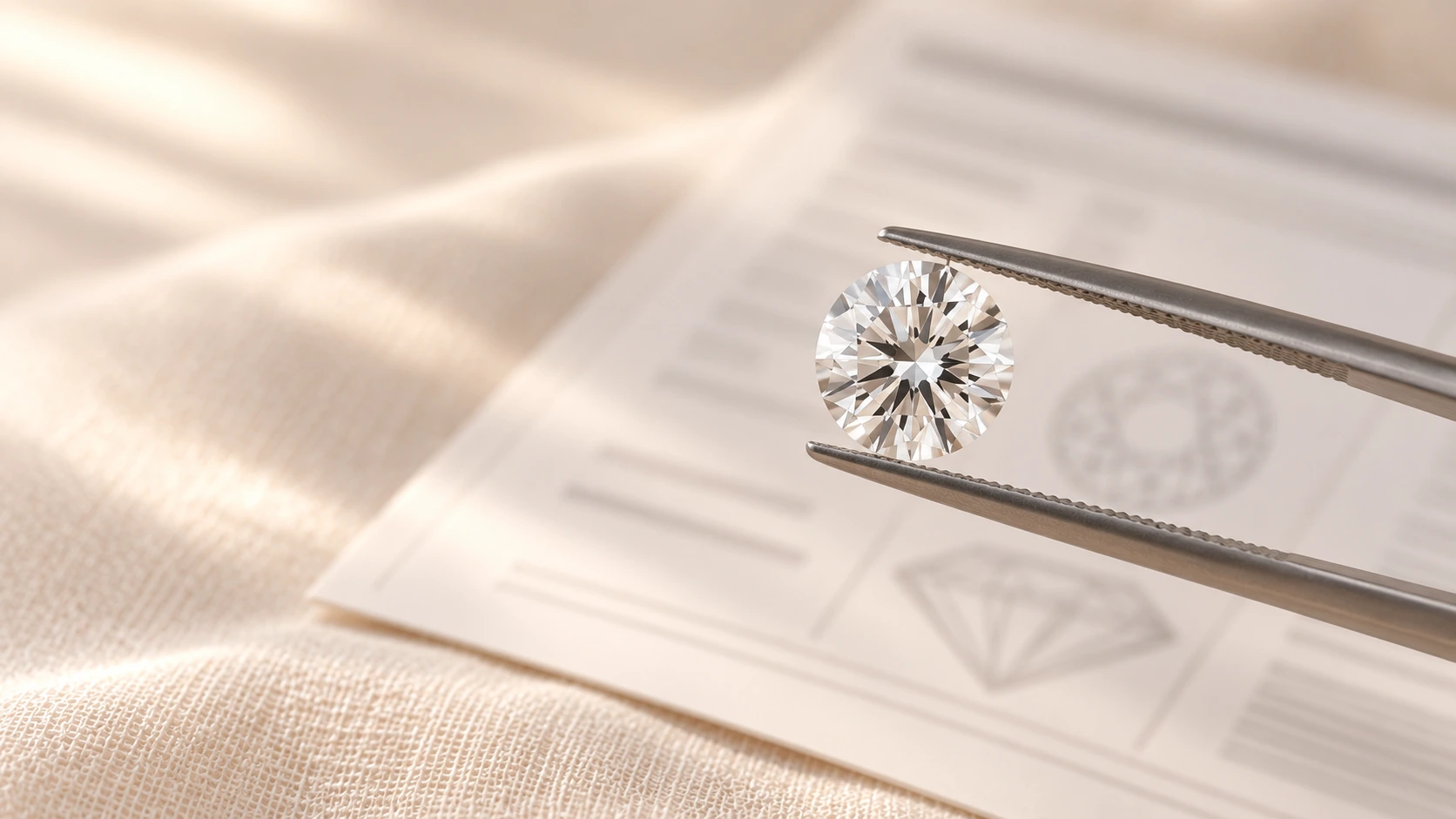
Which Diamond Shape Costs the Most? We Compared 10 Shapes
For lab grown diamonds, round is actually the cheapest shape. We compared 10 shapes at the same grade — here's how much more each of the others costs.

If you've read that round is the most expensive diamond cut, that's the usual answer online, and it comes from mined diamonds. Lab grown diamonds turn it upside down.
We compared ten shapes at exactly the same grade, F color and VS1 clarity with a GIA or IGI report, across lab grown diamonds listed for sale online in the US. Round came out as the cheapest shape at both 1 carat and 2 carats. Every other shape cost more: 16 to 31% more at 1 carat, and 10 to 17% more at 2 carats.

What we compared
We held everything steady except the shape and took the median price for each one: the stone halfway down the list from cheapest to dearest, so a few unusual stones can't skew the result.
What we checked
- When: 28 September 2026, one day's listings
- Stones: 10,403 lab grown diamonds listed for sale online in the US, 4,051 at 1 carat and 6,352 at 2 carats
- Held the same: F color, VS1 clarity, a GIA or IGI report
- Sizes: 1.00–1.09 carats and 2.00–2.09 carats
- Group sizes: from 35 stones (asscher, 1 carat) to 2,335 (round, 1 carat)
- Limits: these are asking prices on one day, not what buyers finally paid
| Shape | 1 carat, vs round | 2 carats, vs round |
|---|---|---|
| Round | 100% | 100% |
| Oval | 116% | 111% |
| Cushion | 124% | 112% |
| Emerald | 122% | 111% |
| Princess | 123% * | 113% |
| Radiant | 128% | 112% |
| Pear | 126% | 111% |
| Marquise | 130% | 117% |
| Asscher | 129% * | 116% * |
| Heart | 131% | 110% |
Shapes marked * are small samples, under 100 stones.
Why lab grown flips the usual answer
Most jewelers' guides say round costs the most, and some put fancy shapes 20 to 30% below it. The reason they give is the rough crystal: cutting a round is said to waste more of it, so each finished carat costs more. That logic comes from mined diamonds, where rough is scarce.
For lab grown diamonds, we found the reverse. One thing the numbers do show is supply: round was by far the biggest group, with more than 2,000 stones at 1 carat against a few hundred or fewer for every other shape. More stones and more sellers usually means sharper prices. That's a likely reason, not a proven one.
Carat still matters more than shape
Choosing a fancy shape added 10 to 31% to the price. Going from 1 carat to 2 carats, at the same grade and shape, multiplied it by about 2.5 to 3 times. So if you're working to a budget, carat and grade are still the bigger levers.
Shape is where you pay a little for looks. Some shapes also look bigger for their weight. A 1-carat oval is about 8.3 by 5.6 mm, while a 1-carat round is about 6.5 mm across, so the oval shows more length on the finger for its extra cost.
If you're shopping for a mined diamond
These numbers are for lab grown diamonds only. If you're buying mined, expect the traditional pattern the guides describe, with round at the top. Either way, compare prices at the same carat, color and clarity before you decide, because that's the only fair comparison between shapes.
Common questions
Not for lab grown diamonds. At the same grade, F color and VS1 clarity, a lab grown oval listed for sale online cost about 16% more than a round at 1 carat, and about 11% more at 2 carats. In return, an oval is longer than a round of the same weight, so it can look bigger on the finger.
For lab grown diamonds, round. In our comparison of ten shapes at the same grade, round was the cheapest at both 1 and 2 carats, and every other shape cost 10 to 31% more. For mined diamonds the usual answer is different: guides generally say round costs the most and fancy shapes cost less.
Not for lab grown diamonds. At F color and VS1 clarity, an emerald cut cost about 22% more than a round at 1 carat and 11% more at 2 carats. Emerald cuts also show inclusions more easily than brilliant cuts, so many buyers choose a higher clarity for them, which pushes the price up further.
Round, but only just. In a 2026 survey of more than 10,000 US couples who married in 2025, round was the top center stone at 26%, with oval right behind at 25%. Emerald, princess, pear and marquise each came in at 8%. The same survey found that round was most common among mined stones and oval among lab grown ones.
Any diamond that isn't a round brilliant. Oval, cushion, emerald, princess, radiant, pear, marquise, asscher and heart are all fancy shapes. The name matters when you read a grading report: labs usually give an overall cut grade only to round brilliants, so for a fancy shape you judge the cut from its polish, symmetry and proportions, and with your own eyes.
It depends on the corners and the facets. A princess is a square brilliant with sharp, pointed corners. An asscher is a square step cut with its corners cut off, so it looks nearly octagonal. A cushion is square or rectangular with rounded corners, and a radiant is square or rectangular with cropped corners and brilliant sparkle. Compare them in our princess, asscher, cushion and radiant engagement rings.