Which Diamond Clarity Do You Need? We Priced Every Grade From SI1 to VVS1
VS2 is enough for most diamonds. But in lab grown, VS1 costs about the same at 1 carat, SI1 is hard to find, and VVS costs more than you'd think. Every grade, compared.

VS2 clarity is good enough for almost any diamond you'd set in a ring. Its inclusions, the tiny crystals and marks inside a diamond, are minor: a grader has to look for them at 10× magnification, and in almost all cases you can't see them with your eyes alone. Clarity is simply the grade for those marks, based on how many there are, how big they are and where they sit.
For lab grown diamonds, the grades around VS2 behave in ways the usual advice doesn't expect. We compared 15,932 lab grown diamonds listed for sale online in the US. At 1 carat, VS1 cost about the same as VS2. SI1, the grade usually sold as the money saver, barely exists: 59 stones out of more than 8,600. And the most common grade was VVS2, near the top of the scale.
Below: every grade from SI1 to VVS1 priced against VS2, then VS1 against VS2, when SI1 is worth a look, when to pay for VVS, and why IGI now does the grading.

Every grade from SI2 to VVS1, against VS2
We set VS2 at 100% and priced each other grade against it, with the color and size held the same. Above 100% means the grade cost more than VS2; below means it cost less.
| Clarity | What a grader sees at 10× | 1 carat, vs VS2 | 2 carats, vs VS2 | Stones listed (1 ct / 2 ct) |
|---|---|---|---|---|
| VVS1 | Inclusions so slight a skilled grader struggles to find them | 145% | 146% | 1,722 / 768 |
| VVS2 | Inclusions so slight a skilled grader struggles to find them | 112% | 132% | 4,021 / 4,194 |
| VS1 | Minor inclusions, difficult to see | 97% | 110% | 2,372 / 1,891 |
| VS2 | Minor inclusions, somewhat easy to see | 100% | 100% | 466 / 378 |
| SI1 | Inclusions you notice | 91% * | 93% * | 59 / 59 |
| SI2 | Inclusions you notice | too few | too few | 1 / 1 |
\* Small sample, under 100 stones. SI2 had one listing at each size, too few to price.
What we checked
- When: 28 September 2026, one day's listings
- Stones: 15,932 lab grown round diamonds listed for sale online in the US, 8,641 at 1 carat and 7,291 at 2 carats
- Held the same: round shape, F color, an IGI report
- Sizes: 1.00–1.09 carats and 2.00–2.09 carats
- Figure used: the median asking price, meaning the stone halfway down the list from cheapest to dearest, so a few odd listings can't pull the result
- Limits: these are asking prices on one day, not what buyers finally paid. We used IGI reports only, because GIA stopped giving lab grown diamonds color and clarity grades on 1 October 2025
VS1 and VS2 cost the same at 1 carat
At 1 carat, a VS1 lab grown diamond cost about 3% less than a VS2, a gap too small to matter. At 2 carats, VS1 cost about 10% more. Face up, you won't tell them apart: in almost all cases, VS inclusions can't be seen without magnification.
The gap only shows under a loupe. At 10×, a VS1 inclusion is difficult to find and a VS2 one is somewhat easy to find. So at 1 carat, choose on the stone itself, not the letter: the one with the better cut and the cleaner video wins. You'll also have more VS1 stones to pick from. They outnumbered VS2 by about five to one, 2,372 against 466, so expect to see plenty of VS1 when you browse 1 carat lab grown diamonds.
At 2 carats, the 10% is worth a thought. VS2 is still the better buy unless the video shows a mark near the middle of the stone.
SI1 is rare in lab grown, and the grade alone won't tell you if it looks clean
SI1 can be a fine choice, but in lab grown it's hard to find and saves little. Only 59 SI1 stones were listed at each size, under 1% of the stones we checked, and they cost about 7 to 9% less than VS2. SI2 was down to a single stone.
For mined diamonds, dropping to SI1 is the classic way to save. That advice doesn't carry over well. Lab grown supply sits high on the clarity scale, so below VS2 there's very little left to choose from.
At 10×, SI inclusions are easy to notice. Whether you can see one without magnification depends on its size, what kind of mark it is and where it sits. Many SI1 stones look clean to the eye, and some don't. The grade can't tell you which, so watch the stone's 360° video at full screen before you buy. Most of our diamonds have one.
Where an inclusion sits matters as much as how big it is:

Step cuts need a higher grade than round
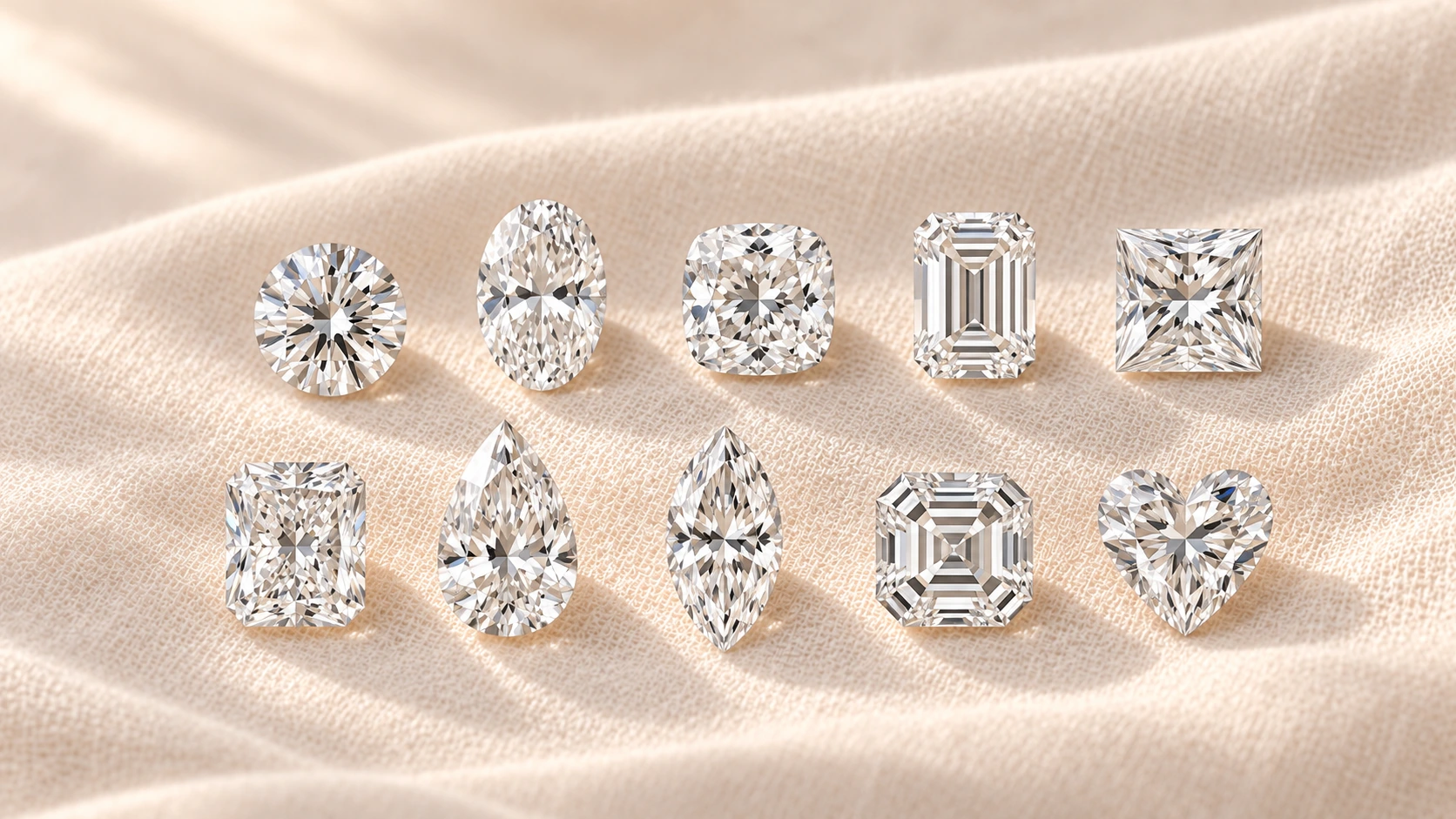
Emerald and asscher cuts have long, open facets that work like a window into the stone, so inclusions show more easily than in a round, oval or cushion full of sparkle. That changes where to start:
| Your diamond | Start looking at | Why |
|---|---|---|
| Round, oval, cushion, pear or radiant, around 1 carat | VS2, or VS1 if you find one you like | VS inclusions almost never show to the eye, and VS1 costs no more at this size |
| The same shapes, 2 carats and up | VS2 | VS1 adds about 10% at this size. Browse 2 carat lab grown diamonds |
| Emerald cut engagement rings and asscher engagement rings | VS1 or better | Open step facets show inclusions more readily |
Step cuts also start from a higher price. In our comparison of diamond shape prices, a lab grown emerald cut cost more than a round of the same grade, so a higher clarity adds to a bigger base.
VVS buys a better report, not a better look
VVS2 was the most listed clarity grade in lab grown: nearly half the stones at 1 carat, and almost 6 in 10 at 2 carats. It cost 12% more than VS2 at 1 carat and 32% more at 2 carats. VVS1 cost about 45% more than VS2 at both sizes.
At VVS, inclusions are so slight that a skilled grader has trouble finding them at 10×. On your hand, VVS and VS look the same. Above VVS1 sit IF (internally flawless) and FL (flawless), the top of the scale. We didn't price those.
The VVS1 step is steeper in lab grown than people expect. For a 1 carat diamond, grading guides put the VVS1 premium over VS at about 15 to 20%. Among lab grown listings it was about 45 to 50%. If a top grade on the report matters to you, that's a fair reason to pay for it. You're paying for the paper and the peace of mind, though, not for a difference anyone will see.
Lab grown clarity grades now come from IGI
Since 1 October 2025, GIA no longer gives lab grown diamonds a clarity grade. It sorts them into two groups instead. Premium needs VVS clarity or better, along with D color. Standard covers the rest, down to VS. So a newer GIA report can't tell you whether a stone is VS1 or VS2. GIA reports issued before that date keep their full grades.
IGI still grades lab grown diamonds on the full clarity scale, which is why we used IGI stones here. IGI also laser-inscribes "LG" and the report number on the stone's edge, so the diamond and its report can be matched. We explain what else a lab report does and doesn't promise in are lab grown diamonds worth it?
Start at VS2 and let the video decide
For a round or another sparkly shape, start at VS2, and at 1 carat take a VS1 if it's the stone you like best. Look at SI1 only if the video shows a clean stone. Whatever you save, put it toward size or cut, which you'll see every day. If you're also choosing a color grade, it moved the price more than clarity did at 2 carats.
We sell every one of these grades, so we don't gain anything from pushing you up or down the ladder. These numbers are for lab grown diamonds only. Mined diamonds have different supply and different price steps, so don't use these figures to judge a mined stone. When you're ready, compare grades side by side in our lab grown diamonds.
More clarity questions
For a center stone, usually not. At I1, I2 and I3, inclusions are obvious at 10× and often visible without magnification, and they can dull transparency and sparkle. Some, especially near the edge, can make a diamond more likely to chip. In lab grown, where VS and VVS stones are plentiful, there's little reason to go this low.
It's a diamond treated to hide its inclusions. Laser drilling bores a tiny channel to bleach a dark inclusion; fracture filling fills small cracks with a glass-like substance. Sellers are expected to disclose any treatment. GIA won't grade a fracture-filled diamond, and its reports mark drill holes on the plot. Read the report before you buy.
Start with the report: besides the grade, it often has a plot, a small map of where each inclusion sits. Then watch the 360° video at full screen for dark marks near the middle. A home loupe helps only if you know what to look for. Our gemologists will also compare stones for you, free. For more on reading a report, see how to tell if a diamond is real.